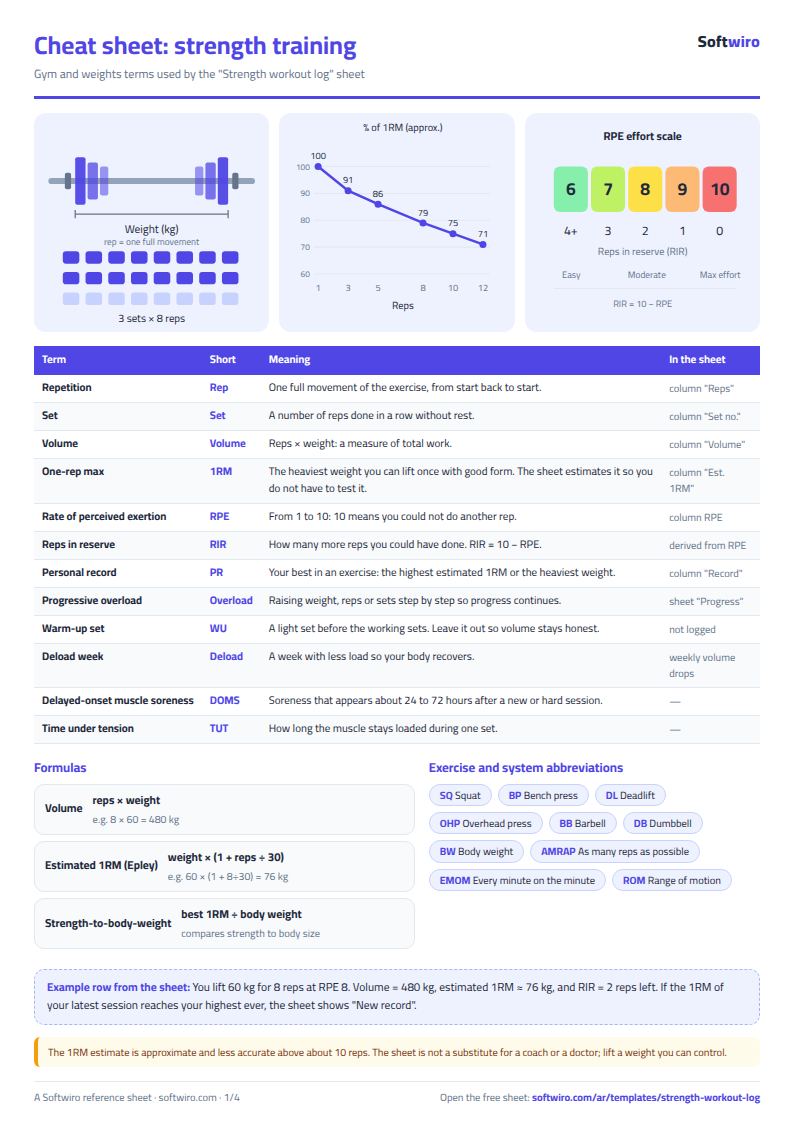
Anyone who trains with weights knows memory is not enough: did you lift more last week than this week? Is today's squat really heavier than last month's? The free strength workout log sheet records every set and works out its volume, an estimated one-rep max (1RM) and your personal records, so you see your progress on one page.
The problem it solves
When you jot your workout in a notes app or on paper, you know what you lifted today but not the direction of the weeks: is your training volume rising or falling, which exercise reached its best level and which slipped. Here you enter each set once and the sheet does the rest, summarised per exercise, per week and per muscle group.
Steps from opening the file to your progress
- Settings: your name, body weight and the date of the first day of the current week (for example Saturday), then your exercises (up to 30) and the muscle group of each.
- Workouts: log each set in a row: the date, the exercise from the list, the set number, the reps and the weight in kg, and the RPE effort score if you like.
- For every row the sheet works out the volume (reps × weight), the estimated 1RM and the muscle group.
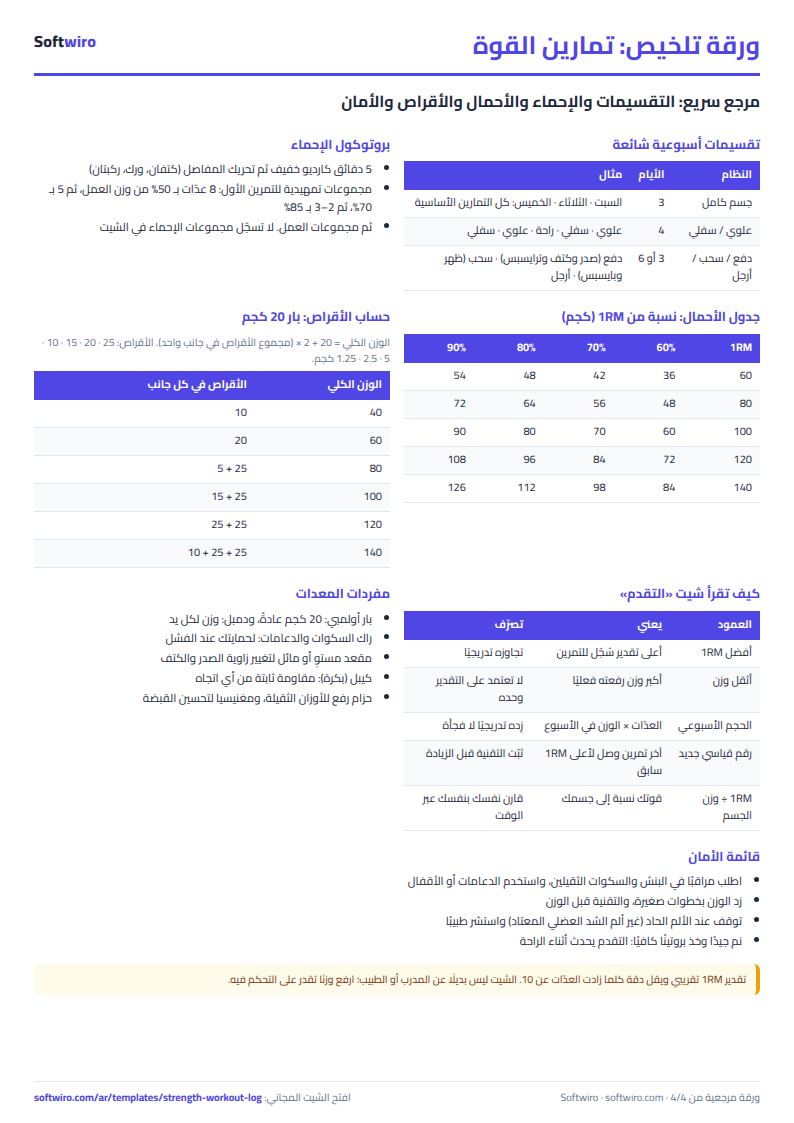
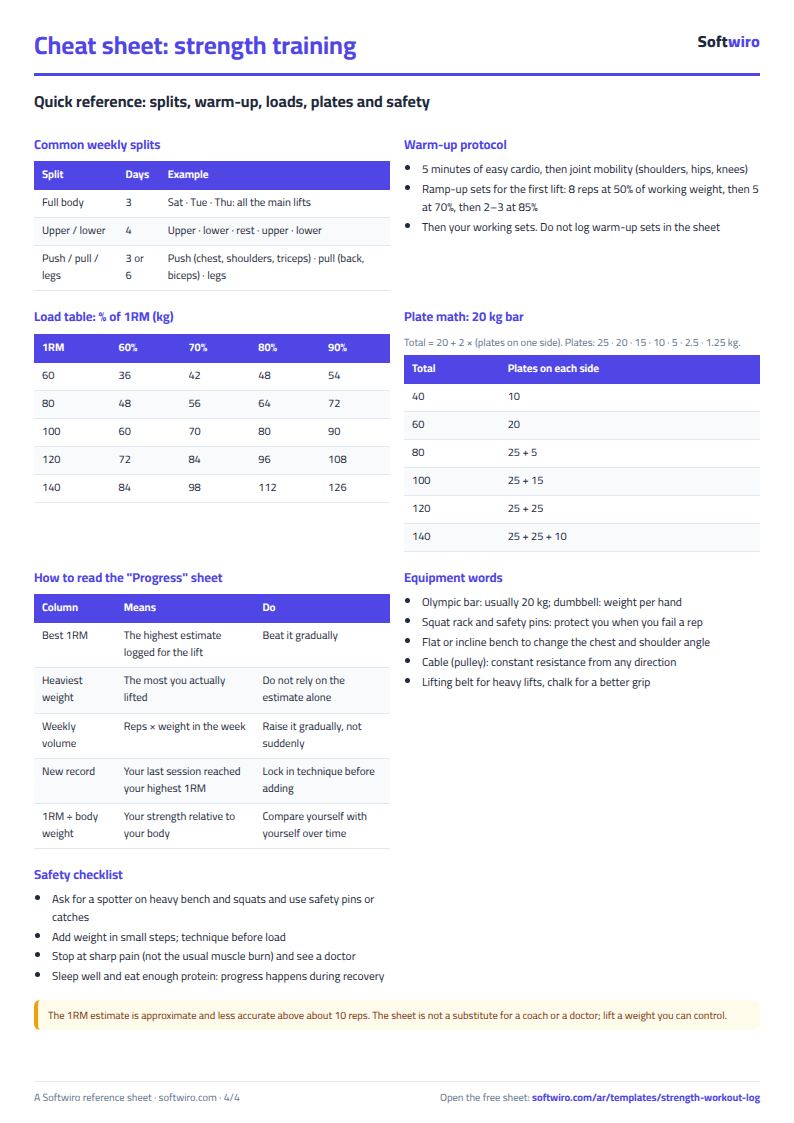
- Open Progress for each exercise's number of sets, volume, best 1RM, heaviest weight and last date, and whether the last session was a record.
- At the top of Progress are your volume for each of the last 8 weeks and your volume per muscle group. Update the week-start date in Settings every week and the tables move with it.
Worked example (sample data)
The name and figures are sample data for an example athlete with a body weight of 82 kg, and the week start is 7 November 2026. 64 sets were logged with a total volume of 27,127.5 kg, one of them for an exercise that is not on the list:
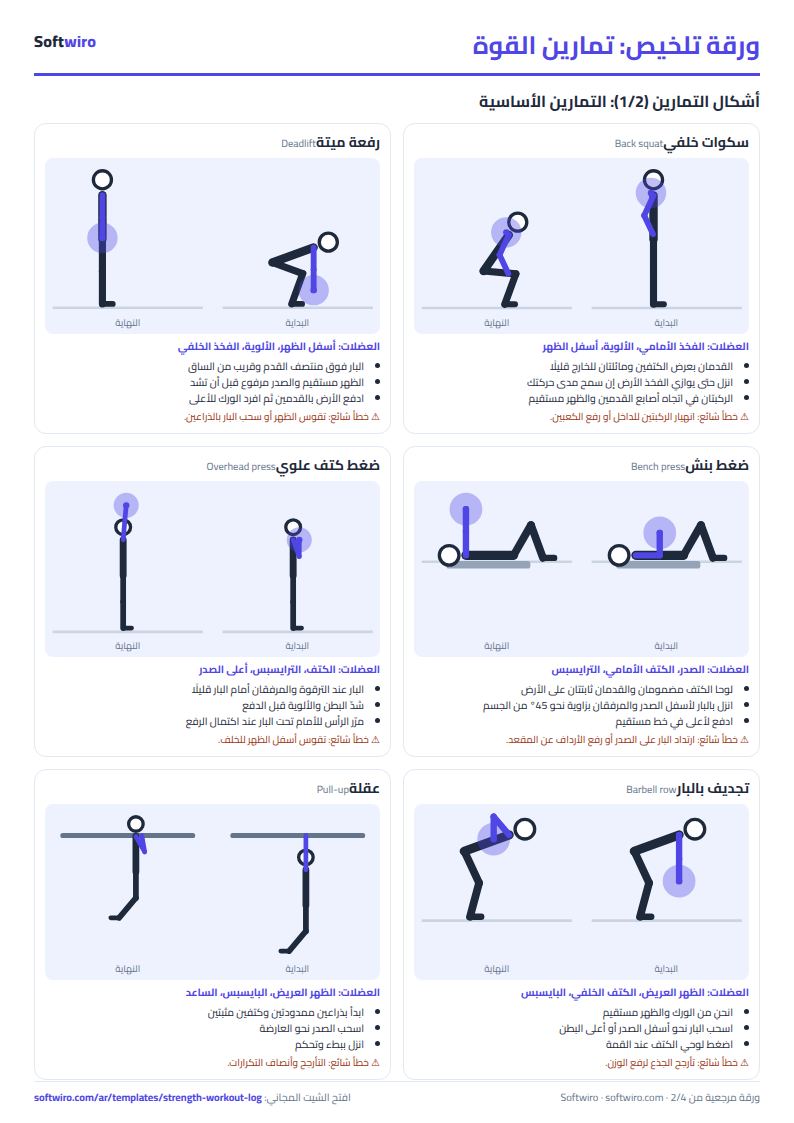
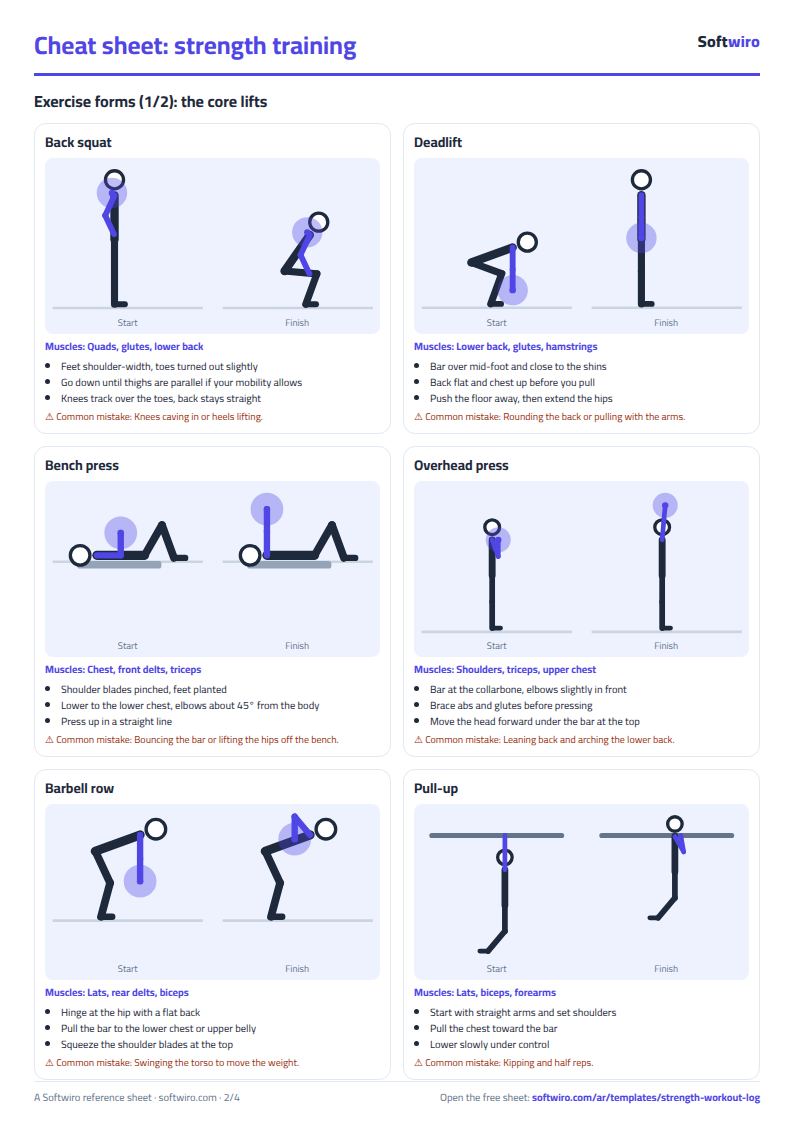
- Bench press: 18 sets, volume 7,585, best 1RM 87.5 (75 kg × 5 reps), heaviest weight 75. The last session, on 9 November, had a best 1RM of 84.58 (72.5 × 5), so no record is shown.
- Squat: 15 sets, volume 8,320, best 1RM 122.5 (105 × 5), heaviest weight 110. The last session (2 November) is the best level, so "new record" shows. Its ratio to body weight is 1.49.
- Deadlift: 9 sets, volume 4,170, best 1RM 138.67 (130 × 2), heaviest weight 130, and a new record on 4 November.
- Bent-over row: 6 sets, volume 2,877.5, best 1RM 79.17, and barbell biceps curl: 6 sets, volume 1,685, best 1RM 43.33. Both show a new record.
- Overhead press: 9 sets, volume 2,290, best 1RM 47.5 (37.5 × 8 on 28 October); the last session (11 November) gave 44.33, so no record.
- Exercises with a record: 4 of 6.
- Weekly volume: the week of 31 October was 4,227.5 kg in 10 sets, up 60.1% on the week before (2,640). The current week, which started on 7 November, is 2,595 in 9 sets; it is not over yet, so it shows −38.6%.
- By muscle group: chest 7,585, legs 8,320, back 7,047.5, shoulders 2,290 and arms 1,685.
- Unlisted exercise: one set with a volume of 200 was entered under an exercise name that is not on the list. It is not lost from the total and shows "not found" in the muscle-group column so you can correct the name.
How the numbers are worked out
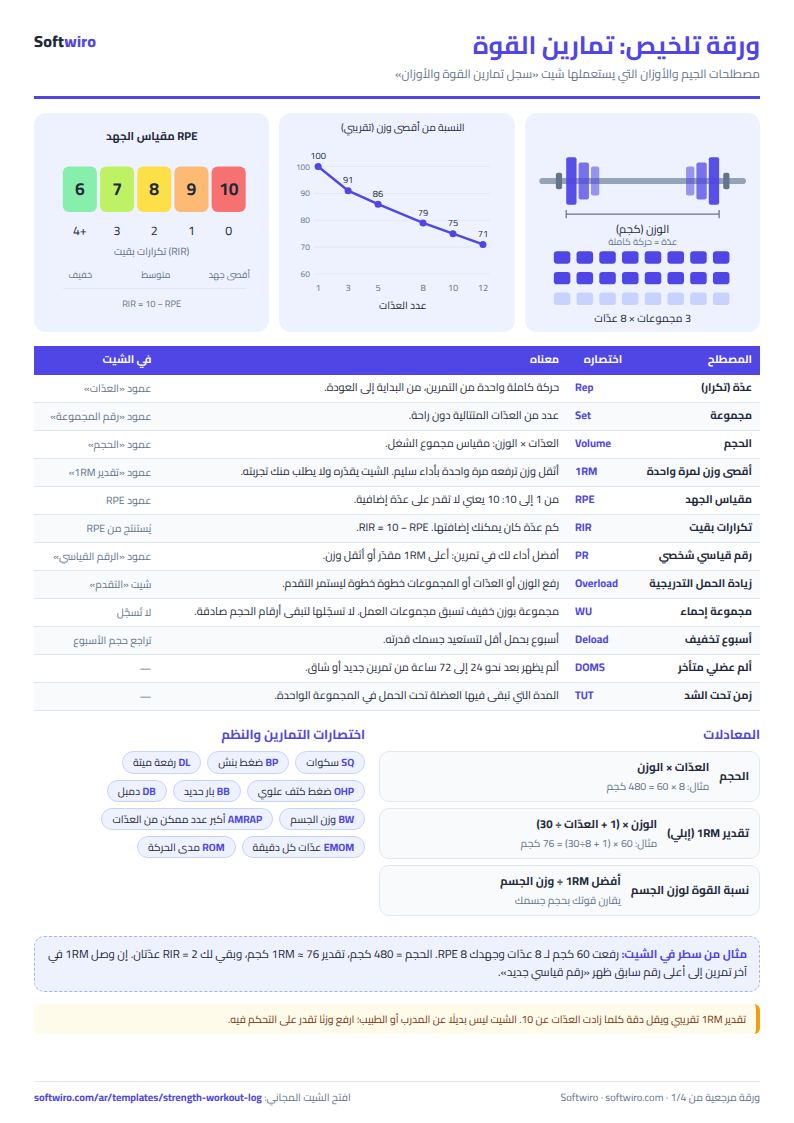
- Volume = reps × weight in kg.
- Estimated 1RM (Epley formula) = weight × (1 + reps ÷ 30). For example 105 × (1 + 5 ÷ 30) = 122.5.
- Record: shown when the best 1RM on an exercise's last training day equals or exceeds the best 1RM you have logged for it over all time.
- Change on the previous week = the week's volume ÷ the previous week's volume − 1.
Limits and tips
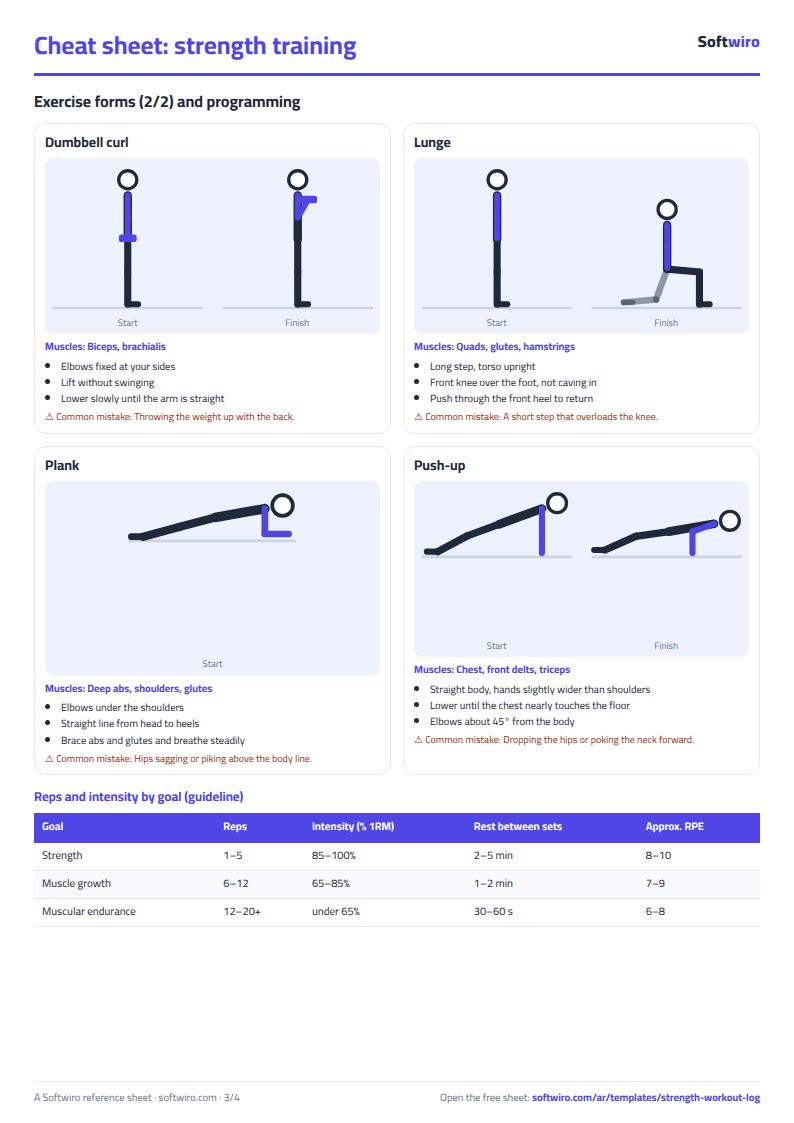
- The 1RM here is an estimate, not a weight you have tested, and it is less accurate beyond 10 reps. Do not load a heavy weight just because the sheet estimated it.
- The sheet only logs your training. It is not a training programme or medical or nutrition advice, and it does not replace a coach, a doctor or a dietitian; consult them before lifting heavy weights.
- Pick the exercise from the list instead of typing it; one wrong letter makes it "not found". Do not delete a row from the middle of the exercise list.
- For a bodyweight exercise (such as pull-ups) enter the added weight or your body weight, and stay consistent with whichever you choose.
- Do not delete or type in the four hidden columns (J to M) on the Workouts sheet; they are used for the calculations.
- The sheet does not write you a plan or suggest raising your loads, and it sends no alerts or shows your training to your coach unless you send them the file.
Try it
Open the sheet and try it online, or download it for Excel. It holds 1500 sets and 30 exercises. If you want an app where your coach follows his athletes' progress, ask for it here.