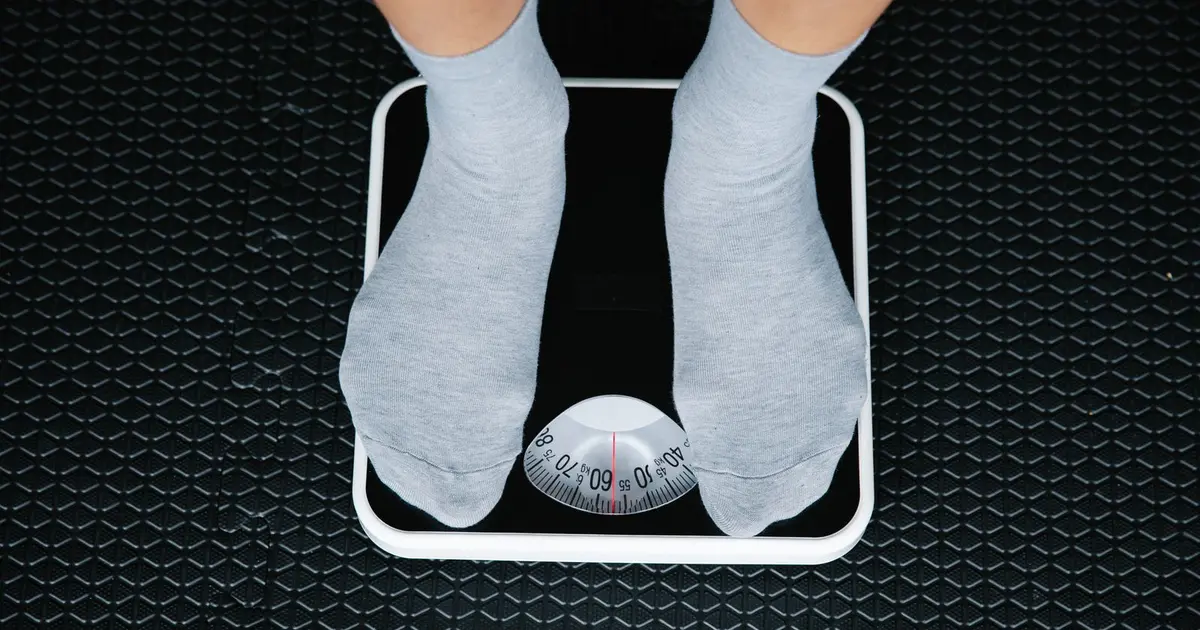
You have a BMI number in front of you, from a calculator, a clinic or a form, and you want to know what it actually means for you and what, if anything, to do about it. The short answer: BMI is a quick screening number. It is useful as a first look and misleading if you treat it as a verdict. This article shows you how to read it, where it fails, what to check next and when to speak to a doctor.
What the number is, and what it is not
BMI is your weight in kilograms divided by your height in metres squared. The CDC puts the adult categories like this: below 18.5 is underweight, 18.5 to under 25 is a healthy weight, 25 to under 30 is overweight, and 30 or more is obesity, split into class 1 (30 to under 35), class 2 (35 to under 40) and class 3 (40 or more).
What the number is not: a measurement of body fat. The CDC says BMI is an indirect measure that is moderately to strongly associated with body fat, and that it does not distinguish between fat, muscle and bone mass. It also does not show where on the body fat is carried. It is a screening tool: it tells you whether a closer look might be worthwhile, not what is going on inside your body.
If you have not calculated yours yet, the BMI calculator on this site takes your age, height and weight in metric or imperial and shows the category, the healthy weight range for your height and how far you are from it. Keep your number open while you read the next sections.
Four worked examples (illustrative)
The numbers below are made up to show the method. Use the BMI calculator for yours.
1. A result in the healthy band. 170 cm and 70 kg. Height squared is 1.7 × 1.7 = 2.89. BMI = 70 ÷ 2.89 = 24.2. Healthy range for this height: 18.5 × 2.89 = 53.5 kg up to 24.9 × 2.89 = 72.0 kg. The person is about 2 kg under the top of the range, so there is little room to gain before reaching the overweight band.
2. A result in obesity class 1. 160 cm and 80 kg. Height squared is 2.56, so BMI = 80 ÷ 2.56 = 31.3. The healthy range is 47.4 to 63.7 kg, so the gap to the top is 80 − 63.7 = 16.3 kg. That is a large gap, but not one to close in a hurry. The NHLBI suggests an initial goal of losing 5% to 10% of your starting weight over about six months; for 80 kg that is 4 to 8 kg. Even that is a meaningful step.
3. A muscular person flagged as overweight. 180 cm and 95 kg. Height squared is 3.24, so BMI = 95 ÷ 3.24 = 29.3, in the overweight band. If this person lifts weights several times a week and measures a waist of 82 cm, the waist is 82 ÷ 180 = 0.46 of height, under the 0.5 mark the NHS uses. BMI says overweight; the waist says otherwise. This is exactly the case where BMI misleads, because it cannot tell muscle from fat.
4. A result that changes with ethnic background. 165 cm and 66 kg. BMI = 66 ÷ 2.7225 = 24.2, healthy by the standard thresholds. The NHS uses lower thresholds for people of South Asian, Chinese, other Asian, Middle Eastern, Black African or African-Caribbean backgrounds: overweight from 23 to 27.4 and obese from 27.5. By those, 24.2 is in the overweight range. Same person, same number, different reading.
The limits you need to know
Muscle and fat. As example 3 shows, a muscular person can be classed as overweight with little body fat. The NHS says plainly that a BMI calculator cannot tell the difference between muscle and fat.
Where the fat is. The CDC notes that BMI does not show where fat is carried. Two people with the same BMI can carry it differently, which is why a waist measure is worth adding (next section).
Ethnic background. The CDC's categories apply the same way to everyone, but the NHS recognises that people from some backgrounds are at risk of health problems at a lower BMI and uses 23 and 27.5 as the overweight and obese starting points for them. The sources I checked give no separate thresholds for Egyptians specifically. If you are from the Middle East and your BMI is between 23 and 25, read it as a prompt to look at your waist and ask your doctor, not as an alarm.
Age. The CDC's adult categories are given for ages 20 and up without separate age cut-offs. Over the years muscle tends to be lost and fat tends to be gained, so the same BMI can hide different things at different ages. That is a reason to look at your waist and your health history rather than the number alone, not a reason to ignore it.
Children and teenagers. Do not use an adult calculator for a child. The WHO assesses children aged 5 to 19 by BMI-for-age compared with growth references, and the CDC plots a child's BMI as a percentile for age and sex on growth charts. Ask your child's doctor.
Pregnancy. The adult categories are not meant to be applied to a pregnant woman, and I found no source that supports reading a pregnant woman's BMI against them. Weight during pregnancy is followed by your doctor or midwife.
Common mistakes when reading the result
- Treating one reading as a trend. Weight moves with water, food and time of day; measure under similar conditions before you compare.
- Typing height in the wrong unit, for example 1.65 in the centimetre box, which gives an absurd BMI.
- Aiming for the exact middle of the healthy range. It is a range for a reason; anywhere inside it counts.
- Comparing your BMI with someone else's. Build, muscle and background differ.
What to measure besides BMI
The simplest addition is your waist. The NHS advice is to keep your waist to less than half your height. The method: measure around your waist, halfway between the bottom of your ribs and the top of your hips, after breathing out normally, then divide by your height in the same unit. A waist of 90 cm at a height of 160 cm gives 90 ÷ 160 = 0.56, above 0.5. The NHS also says the waist-to-height ratio can be used when your BMI is under 35.
The CDC suggests that, for an individual, you look at other findings such as blood pressure and muscle mass alongside BMI. Those are things a doctor can measure for you in a normal visit.
Also look at how you are, not only what you weigh: your energy, your sleep, how you cope with stairs and exercise, and whether your clothes are getting looser or tighter. Together with a waist measure, that picture is much more informative than one number.
When to talk to a doctor
The NHS says to see a GP if your BMI is in the overweight or obese range and any of these apply: you want help losing weight; your waist is more than half your height; you have pre-diabetes, diabetes, high blood pressure, joint pain, high cholesterol, sleep apnoea or cardiovascular disease; you have a family history of obesity; or you have or may have an eating disorder such as binge eating.
Two more cases are worth raising even though the sources I checked do not list them: a BMI below 18.5, and any weight change you did not intend. And if you take medicines or have a medical condition, talk to your doctor before changing your diet or exercise.
This article is general information, not a diagnosis or medical advice.
A simple decision test
- Calculate your BMI and note the category.
- Measure your waist and divide by your height. Under 0.5 is reassuring; over 0.5 deserves attention.
- Ask whether BMI could be misleading for you: lots of muscle, or a background where lower thresholds apply.
- If BMI is 25 or more and your waist is over half your height, or one of the NHS conditions above applies, book a doctor.
- If you want to lose weight, aim first at 5% to 10% of your weight over about six months, not at the top of the healthy range.
If you decide to book, how to book a doctor online in Egypt walks through doing it without calling five clinics. And if you want your height, weight, allergies and conditions in one place that you and your doctor can both read, see what a digital health card and health passport are.
The next step
Recalculate with your real numbers in the BMI calculator, then measure your waist today and divide it by your height. Write both numbers down with the date. If you then want to see how many calories your body needs a day, read the daily calories guide (BMR and TDEE). If you run a clinic and want patients to keep a medical file with their height and weight, Softwiro's MyClinic includes one; to discuss it, contact us.
Sources
- Adult BMI categories — CDC. The cut-offs and obesity classes, and that BMI is a screening measure.
- About BMI — CDC. BMI does not distinguish fat, muscle and bone, nor show where fat is carried; children's BMI by percentile for age and sex.
- Overweight and obesity in adults and Overweight and obesity — NHS. Lower thresholds (23 and 27.5) for some backgrounds, waist under half your height, when to see a GP, and that a BMI calculator cannot tell muscle from fat.
- Obesity and overweight — WHO. BMI definition and that children aged 5 to 19 are assessed by BMI-for-age.
- Calories and weight loss — NHLBI (NIH). An initial goal of 5% to 10% of your weight over about six months.